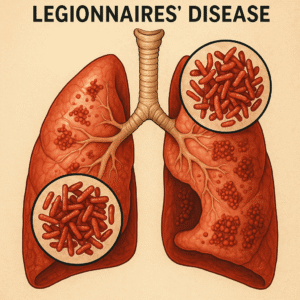
🔍 What Is Legionnaires’ Disease?
Legionnaires’ disease is a severe type of pneumonia triggered by the bacterium Legionella pneumophila. It affects the lungs and can cause life-threatening respiratory complications, especially in older adults or those with weakened immune systems.
First discovered after a 1976 outbreak at an American Legion convention in Philadelphia, this disease continues to make headlines due to sporadic outbreaks in public buildings and hospitals.
🦠 How Does Legionella Bacteria Spread?
Unlike the flu or COVID-19, Legionnaires’ disease is not transmitted person-to-person. The primary mode of transmission is through inhalation of aerosolized water droplets contaminated with Legionella bacteria.
🏢 Common Contaminated Sources:
- Cooling towers (air conditioning systems in large buildings)
- Showers and taps
- Hot tubs and spas
- Decorative fountains
- Humidifiers
- Large plumbing systems
- Industrial mist machines
🎯 Who Is at Risk?
While anyone can get Legionnaires’ disease, the risk is significantly higher in:
- People aged 50+
- Smokers or ex-smokers
- Individuals with chronic lung conditions (COPD, asthma)
- People with weakened immune systems (cancer patients, diabetics)
- Hospital patients on ventilators
- Individuals on immune-suppressing medications (e.g., after organ transplant)
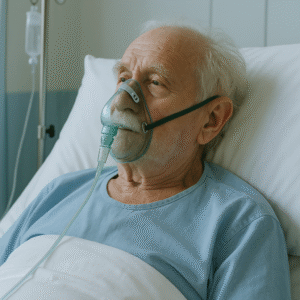
❗ Signs and Symptoms of Legionnaires’ Disease
Symptoms usually appear 2 to 10 days after exposure, and they can resemble other forms of pneumonia or flu. However, Legionnaires’ disease progresses quickly and can become severe if left untreated.
🚨 Early Symptoms:
- High fever (often over 104°F or 40°C)
- Chills
- Muscle pain
- Headache
- Fatigue
😷 Respiratory Symptoms:
- Persistent dry or productive cough
- Chest pain
- Shortness of breath
- Wheezing
🧠 Other Possible Symptoms:
- Nausea
- Diarrhea
- Confusion or mental disorientation (especially in older adults)
🧪 How Is Legionnaires’ Disease Diagnosed?
Because the symptoms overlap with many other conditions, accurate diagnosis is crucial. The following tests are typically used:
- Chest X-ray to detect lung inflammation or pneumonia
- Urine antigen test (detects Legionella proteins in urine)
- Sputum culture (to identify the bacteria)
- Blood tests for white blood cell count and infection markers
💊 Treatment Options for Legionnaires’ Disease
This disease requires prompt antibiotic treatment, often given intravenously in severe cases.
✅ Commonly Prescribed Antibiotics:
- Azithromycin
- Levofloxacin
- Doxycycline
Most patients begin to recover within a week of treatment, but hospitalization is often necessary. For severe cases, ICU care and oxygen therapy may be required.

🛡️ Prevention: Protecting Homes and Workplaces
Prevention revolves around controlling Legionella growth in water systems. This is especially important in commercial buildings, hospitals, hotels, and public spas.
✅ Prevention checklist
| Action Item | Description |
| Maintain Hot Water Temperature | Keep hot water above 60°C (140°F) and cold below 20°C (68°F) |
| Clean Shower Heads Regularly | Especially in hotels or gyms |
| Maintain Cooling Towers | Clean and disinfect periodically |
| Test Water Systems | Especially in hospitals and high-risk buildings |
| Avoid Stagnant Water | Flush unused taps and showers weekly |

📈 Legionnaires’ Disease: Outbreak History and Statistics
Outbreaks are often linked to poorly maintained water systems in hotels, hospitals, and public buildings.
📊 Key Facts:
- In the U.S., there are ~10,000 cases reported annually (CDC)
- Actual cases are likely underreported
- Most outbreaks are preventable
- Fatality rate can be 10–25% in hospitalized patients
Notable Outbreaks:
- 1976: First major outbreak at the American Legion Convention in Philadelphia
- 2015: New York City outbreak traced to a cooling tower, with over 100 infected
- 2023: Cases linked to a spa in a European resort
🤒 Difference Between Legionnaires’ Disease and Pontiac Fever
Pontiac Fever is a milder illness also caused by Legionella bacteria. It does not cause pneumonia but does result in flu-like symptoms.
| Feature | Legionnaires Disease | Pontiac Fever |
| Severity | Severe, pneumonia-like | Mild, flu-like |
| Incubation | 2-10 days | 1-2 days |
| Hospitalization | Often required | Rare |
| Fatality | Possible | Very rare |
🌍 Global Perspective on Legionnaires’ Disease
Legionnaires’ disease is a global health concern, especially in countries with aging infrastructure. European countries and the U.S. report the most outbreaks, but Asia and Africa face underreported cases due to lack of surveillance systems.
WHO emphasizes the need for regular inspection protocols and national prevention strategies.
According to the CDC’s Legionella resource page, early diagnosis and antibiotic treatment are essential for preventing complications.
The World Health Organization emphasizes global water safety standards as key to preventing Legionella outbreaks in developing countries.
🧭 How to Handle a Suspected Outbreak
If a suspected outbreak occurs:
- Notify health authorities immediately
- Test the suspected water systems
- Isolate the infected individuals
- Disinfect and flush the water systems
- Conduct epidemiological investigations
🙋♀️ Frequently Asked Questions (FAQ)
Q1: Is Legionnaires’ disease contagious?
❌ No. It is not spread from person to person.
Q2: Can I get it from drinking water?
❌ No. Only inhaling mist from contaminated water can cause infection.
Q3: Can Legionella live in home showers?
✅ Yes, especially if the system is not used regularly or cleaned.
Q4: How long does recovery take?
⏳ Mild cases: 1–2 weeks. Severe cases may take several weeks.
Q5: Is there a vaccine for it?
❌ Not yet, but research is ongoing.